
Role of Modern Agriculture Education in Sustainable Farming
Agriculture book publishers in India play an important role in helping colleges and universities
access learning resources that reflect the latest developments in the field. As agriculture
continues to evolve through technological advancements, scientific research, and sustainable
farming practices, educational institutions must ensure their academic resources evolve
alongside it. Modern learning materials help educators deliver relevant instruction while
preparing students to meet the changing demands of the agriculture sector.
Here’s why updated learning resources have become essential in modern agriculture education.
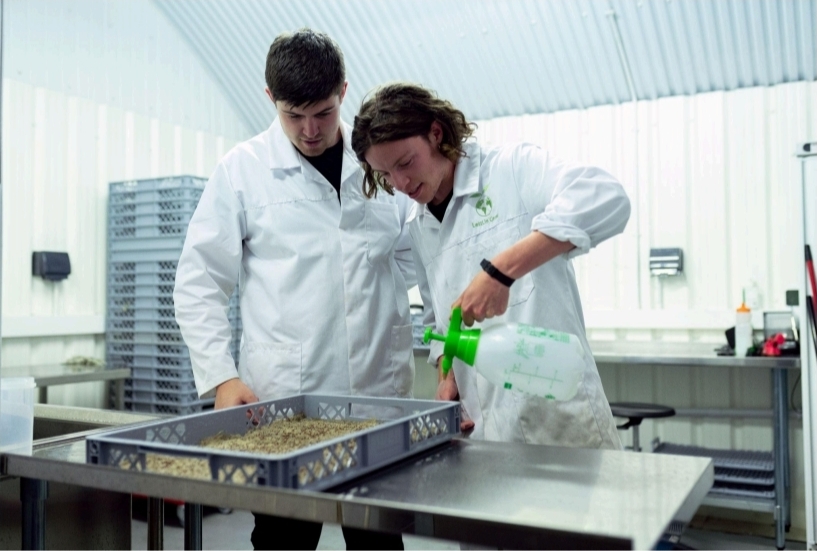
Agriculture Is Changing Faster Than Ever
Agriculture today is very diferent from what it was even a decade ago. Farmers are increasingly
adopting precision agriculture, smart irrigation systems, drones, data-driven decision-making,
and sustainable farming techniques. Climate change, food security, and resource management
have also become major focus areas for the industry.As these developments continue to shape agriculture, educational institutions must ensure
students are learning concepts that reflect current practices instead of relying solely on outdated
information. This requires learning resources that evolve alongside the industry and prepare
graduates for the realities of modern agriculture.
Modern Learning Resources Create Better Classrooms
High-quality learning resources help educators bring modern agriculture into the classroom.
Updated textbooks often include recent case studies, revised research findings, practical
applications, and examples that reflect today’s agricultural landscape.
When faculty members have access to current academic materials, classroom discussions
become more relevant, helping students connect theoretical concepts with real-world
agricultural challenges. This creates a more engaging learning environment while improvin

Conclusion
Modern agriculture requires modern education, and that begins with access to current, reliable
learning resources. Updated academic books help institutions strengthen classroom teaching,
encourage meaningful research, and prepare students for the future of agriculture. By working
with experienced agriculture book publishers in India, colleges and universities can continue
building academic collections that support innovation, research, and long-term educational
excellence. As the industry continues to evolve, agriculture book publishers in India will remain
valuable partners in helping institutions provide relevant, future-ready learning resources.
The evolution of modern agriculture education is essential to address global food security, climate resilience, and sustainable farming systems. Traditional farming models are rapidly integrating with smart technologies, precision tools, and biological sciences. Consequently, students, agronomists, and researchers require contemporary academic resources that cover data-driven agronomy, automated harvesting, and advanced soil management techniques.
Furthermore, investing in modern agriculture education fosters entrepreneurial opportunities and technical competence across rural and urban farming communities. When higher education institutions incorporate hands-on field trials, digital farming software, and comprehensive reference books into their curricula, learners gain real-world problem-solving abilities. Empowering future agricultural leaders with up-to-date scientific literature ensures that the industry can transition smoothly toward eco-friendly, productive, and highly resilient farming ecosystems worldwide.
The continuous integration of precision farming, drone analytics, and climate-resilient practices makes modern agriculture education indispensable for higher studies. Beyond foundational agronomy textbooks, learners require comprehensive exposure to biological crop protection, efficient water utilization, and modern agribusiness management. When universities combine practical laboratory trials with up-to-date scientific publications, agricultural graduates emerge equipped with the critical skills required to transform sustainable food production systems globally.
Moreover, experiential training through field laboratories and agricultural workshops equips learners with actionable technical skills. By integrating modern digital farming tools, soil sensor management, and organic crop protection into daily studies, future professionals become thoroughly prepared to lead agribusiness advancements and address regional cultivation problems effectively.
Consequently, educational institutions that continuously upgrade their academic literature ensure that agricultural graduates possess the necessary analytical abilities and practical knowledge to achieve long-term food sustainability term food sustainability agricultural graduates possess the necessary analytical abilities and practical knowledge to achieve long-term food sustainability term food sustainability
 A & A BOOKS publish books on all Academic subjects of Sciences & Humanities and Agriculture, Veterinary, Animal Husbandry, Horticulture, Food Science and Technology, Dairy Sciences, Biosciences and all Life sciences subjects.