
Choosing a textbook is not simply about finding a well-known title in a particular subject. The right book should match the course objectives, student level, teaching approach, and the amount choose textbooks of material that can realistically be covered during the semester. For colleges, working with experienced academic book publishers in India can also help departments identify suitable titles across different subjects and specialisations.

1. Start With the Course Learning Outcomes
Before comparing books, list what students Choose Textbooks should be able to understand or do by the end of the course. A textbook should support those outcomes directly.
A practical approach is to create a simple checklist of 5 – 10 learning outcomes and score each candidate textbook from 1 to 5 based on how well it supports them. Choose Textbooks A book scoring below 3 for more than 20% of the outcomes may require substantial supplementation.
This prevents departments from choosing books based solely on reputation or familiarity.
2. Check How Much of the Syllabus the Book Covers
A textbook does not necessarily need to contain Choose Textbooks everything in the syllabus, but it should cover the core 70 – 80% of the topics that students are expected to study.
Map the syllabus against the book’s table of contents. Mark each topic as:
-
- Fully covered
-
- Partially covered
-
- Not covered
If several important topics fall into the last 2 categories, the department should determine whether supplementary books will be practical or whether another textbook would provide better coverage.
This is especially useful when academic book Choose Textbooks publishers in India offer multiple titles covering the same subject from different academic perspectives.
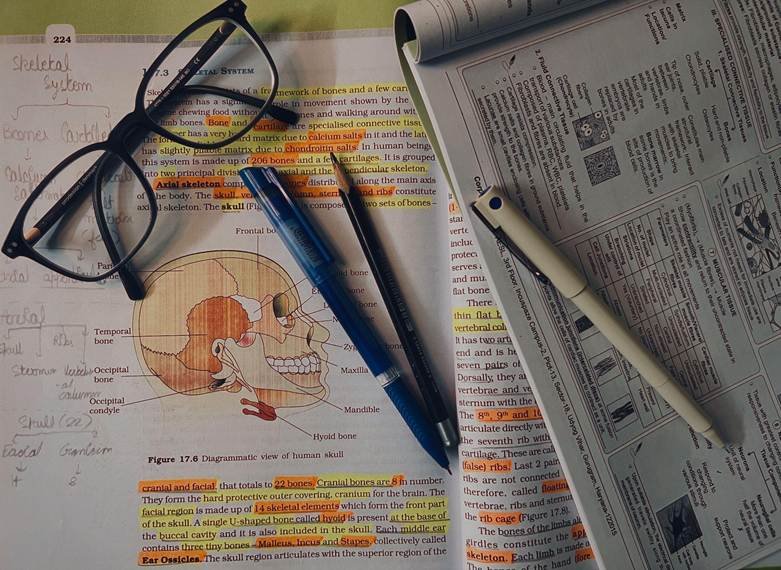
3. Match the Book to the Student Level
A book written for postgraduate researchers may be Choose Textbooks unnecessarily complex for undergraduate students, while an introductory textbook may not provide enough depth for advanced courses.
Check the book’s:
-
- Intended academic level
-
- Prerequisite knowledge
-
- Mathematical or technical complexity
-
- Terminology
-
- Depth of explanations
As a practical test, ask 2 – 3 faculty members to independently review a sample chapter and rate its difficulty from 1 to 5. If their ratings differ by more than 2 points, the department should discuss whether the book is appropriate for the intended cohort.
4. Evaluate the Learning Features Inside the Book
The quality of a textbook is also determined by how effectively it helps students study independently.
Look for features such as chapter summaries, worked examples, diagrams, case studies, review questions, practical exercises, and references Choose Textbooks for further reading.
Rather than counting every feature, identify the 3 – 5 features most important to the course. For a laboratory-based subject, practical exercises may matter more than extensive end-of-chapter theory questions. For a theoretical course, summaries and conceptual questions may be more valuable.
The book should support the way the course is actually taught.
5. Check the Edition and Content Currency
Some subjects change quickly, while others rely heavily on established principles. Departments should therefore consider how frequently the subject’s knowledge base changes before selecting an edition.
As a basic rule, check whether the textbook:
-
- Reflects the current syllabus
-
- Uses up-to-date terminology and standards
-
- Includes developments relevant to the subject
-
- Cites sufficiently recent research where appropriate
For rapidly changing subjects, departments can review whether the book has been updated within the last 3 – 5 years. For stable foundational subjects, an older edition may still remain academically useful.
Academic book publishers in India can help departments identify newer editions and titles when course content changes.
6. Compare Cost With Expected Use
A textbook should also make financial sense for students and the institution.
Instead of looking only at the cover price, estimate how frequently the book will actually be used. If a book is required for 4 – 6 months, determine whether students will use it throughout the course or only for a few chapters.
For library procurement, departments can also compare the expected number of users with the number of copies required. A heavily prescribed textbook may need multiple copies, while a specialised reference book may only require 1 – 3 library copies initially.
This helps institutions make purchasing decisions based on actual demand rather than simply buying the most titles possible.
7. Review the Book Before Finalising It
Finally, do not select a textbook from its title or catalogue description alone. Obtain a sample chapter or examination copy whenever possible and conduct a short faculty review.
A useful 10-point evaluation checklist can include:
-
- Syllabus coverage
-
- Academic level
-
- Content accuracy
-
- Currency
-
- Teaching features
-
- Readability
-
- Practical relevance
-
- Assessment support
-
- Cost/value
-
- Faculty suitability
Departments can set a minimum threshold, such as 75/100, before adopting a textbook. Keeping the completed evaluation also gives the department a clear basis for reviewing the choice later.
Conclusion
The best textbook is not necessarily the most famous or comprehensive title. It is the one that fits the course’s learning outcomes, covers the required syllabus, matches student ability, supports the teaching method, and provides reasonable value.
By using a structured evaluation process and consulting academic book publishers in India where necessary, colleges can make textbook selection more consistent and easier to justify across departments. A similar review can then be repeated whenever a course is revised or a new edition becomes available.
FAQs
1. Should every college course have a single textbook?
Not necessarily. One core textbook can provide structure, while reference books and supplementary materials can cover specialised topics.
2. How often should a college review its textbook?
A review should be considered whenever the syllabus changes, a substantially revised edition is published, or faculty identify gaps in the existing book.
3. Who should choose a college textbook?
The relevant faculty members or department should lead the academic evaluation, with library and institutional procurement teams contributing where appropriate.
4. Should departments always choose the newest edition?
No. The newest edition is useful when the subject has changed significantly, but an older edition may remain appropriate for stable subjects.
5. How many textbooks should a college compare?
Comparing 3 – 5 suitable titles usually gives a department enough alternatives without making the selection process unnecessarily complicated.
6. Can academic book publishers in India help with textbook selection?
Yes. Publishers can provide catalogues, sample chapters, information about editions, and details about books available for specific academic subjects.
 A & A BOOKS publish books on all Academic subjects of Sciences & Humanities and Agriculture, Veterinary, Animal Husbandry, Horticulture, Food Science and Technology, Dairy Sciences, Biosciences and all Life sciences subjects.