
Choosing academic books for a college library can be challenging when different departments have different requirements and library budgets need to be used carefully. Working with a reliable academic book supplier in India can make sourcing easier, but librarians still need to evaluate whether each title is relevant, current, and suitable for their institution.

Alt text: academic book supplier in India: ordering new academic books
1. Relevance to Current Courses
The first thing librarians should consider is whether a book supports the college’s current academic programmes. A well-known title may not be useful to the library if it does not match the subjects being taught or the level of the students who will use it.
Librarians can review course structures and consult professors or department heads before ordering new titles. Faculty recommendations can help identify books that support specific courses while also highlighting gaps in the existing collection.
For newly introduced programmes, libraries can prioritise foundational textbooks before gradually adding more specialised resources.
2. Edition and Publication Date
The edition of an academic book can affect how useful it is for current teaching and research. New editions may contain updated research, revised concepts, new references, or changes in established practices.
This is particularly relevant for subjects that develop quickly. However, older editions should not automatically be excluded. Classic texts and established reference works can continue to provide value depending on the subject and purpose of the book.
Before placing an order, librarians should confirm the edition and publication date and check whether a newer version is available. A reliable academic book supplier in India should also be able to provide accurate information about available editions.
3. Author and Publisher Credentials
The background of the author and publisher can provide useful information when evaluating an academic title. Librarians can consider the author’s academic or professional experience and whether the book comes from an established publishing process.
This is especially relevant for specialised or advanced subjects where students and faculty require detailed and academically sound material.
Faculty recommendations can also help librarians assess whether a particular author or title is commonly used within the discipline. Combining faculty input with basic checks of the author and publisher can make the selection process more informed.

Alt text: academic book supplier in India: well known author
4. Depth and Scope of Subject Coverage
A book’s title alone does not reveal whether it provides the level of coverage required by a particular department. Librarians should review the table of contents, chapters, references, illustrations, and overall depth before ordering.
For example, an introductory textbook may work well for undergraduate students, while postgraduate students may need more detailed or research-oriented material.
Comparing several books on the same subject can also prevent unnecessary duplication. Instead of purchasing multiple titles that cover identical material, libraries can build a collection that provides different levels and perspectives on the subject.
5. Quality and Presentation
The physical and editorial quality of a book matters when it is expected to remain in a library collection for years. Librarians can consider the quality of the binding, paper, printing, diagrams, tables, references, and overall readability.
This can be particularly important for technical and scientific subjects. Clear illustrations, well-organised tables, and properly presented references can make academic material easier to use.
Libraries should therefore consider both the content and the physical usability of a book before placing larger institutional orders.
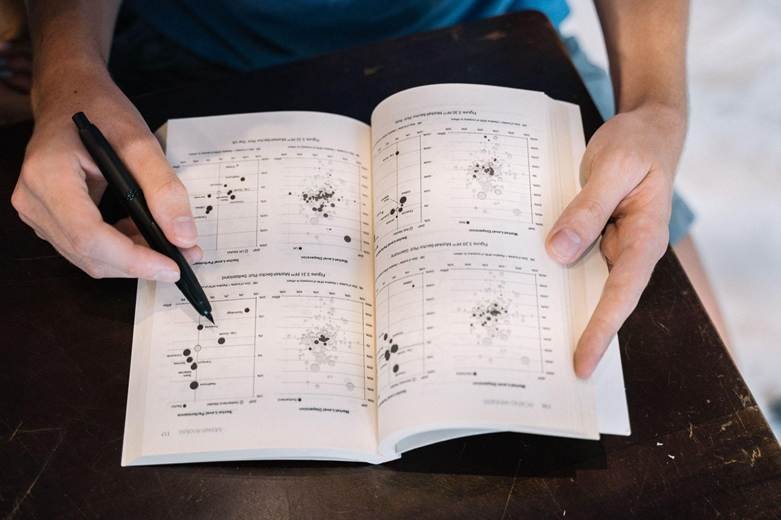
Alt text: academic book supplier in India: visual presentation of information
6. Availability Across Academic Disciplines
Colleges often need books for several departments during the same procurement cycle. A supplier with a broad catalogue can make this process easier by providing access to titles across different areas of study.
For example, an institution may need books for agriculture, veterinary science, life sciences, management, or other programmes. Before working with an academic book supplier in India, librarians can check whether the supplier covers the subjects required by their different departments.
A broad catalogue can also help libraries identify areas where their existing collections need expansion.
7. Ordering and Supplier Support
The procurement process itself deserves attention. Librarians should look at how easily they can obtain book information, check availability, request quotations, place institutional orders, and receive updates about delivery.
Clear communication can be particularly useful when a library is ordering a large number of titles or sourcing books for multiple departments.
Before finalising an order, librarians can confirm the available edition, pricing, expected delivery timeline, and any institutional procurement requirements. Working with an academic book supplier in India that can provide clear information throughout the process can make book procurement easier to manage.
Conclusion
Ordering academic books involves more than selecting titles from a catalogue. Libraries need to consider course relevance, publication details, author credentials, subject coverage, publishing quality, availability, and the overall procurement process.
A structured selection process can help librarians use their budgets effectively while developing collections that serve both students and faculty. An academic book supplier in India can support this process by helping institutions access books across different academic disciplines and providing information needed for procurement decisions.
For colleges with multiple departments, taking a planned approach to book selection can also help create a more balanced library collection that supports teaching, independent learning, and academic research.
FAQs
1. What should librarians consider before ordering academic books?
Librarians should consider the book’s relevance to current courses, edition, publication date, author credentials, subject coverage, quality, availability, and the supplier’s procurement support.
2. Why is the edition of an academic book important?
Newer editions may contain updated research, concepts, references, examples, and other information that can make them more relevant to current academic requirements.
3. Should libraries replace all their older academic books?
No. The need to replace an older book depends on the subject and its purpose. Classic texts and established reference works can still be useful, while rapidly changing subjects may require newer editions.
4. How can librarians determine whether a book covers a subject sufficiently?
Librarians can review the table of contents, depth of coverage, references, illustrations, and intended academic level. Faculty recommendations can also help determine whether a title meets course requirements.
5. Why should librarians check the author’s background?
An author’s academic or professional experience can help librarians assess whether the book is appropriate for the subject and intended audience, particularly for specialised academic areas.
6. Can libraries source books for multiple departments from one supplier?
Yes, suppliers with broad academic catalogues may provide titles across multiple disciplines, allowing colleges to manage procurement for different departments through a more streamlined process.
 A & A BOOKS publish books on all Academic subjects of Sciences & Humanities and Agriculture, Veterinary, Animal Husbandry, Horticulture, Food Science and Technology, Dairy Sciences, Biosciences and all Life sciences subjects.